Lukewarm Pizza and a $300 Guarantee: The Real Hospitality Touring DJs Eat
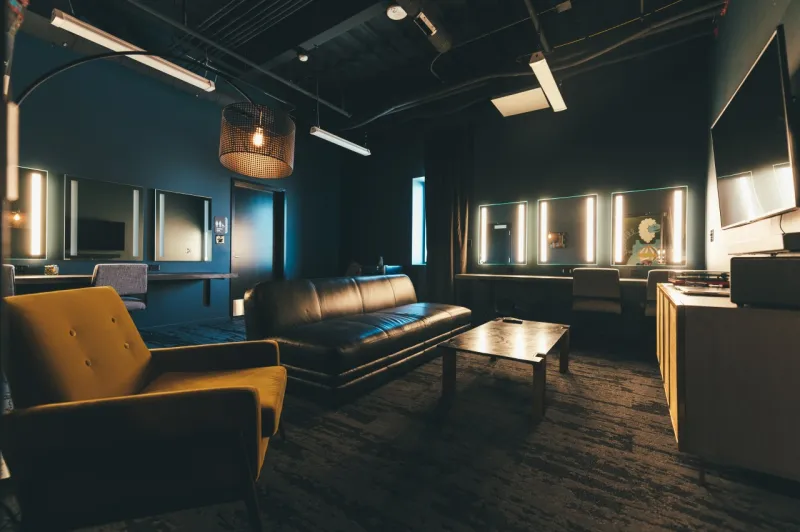
Photo: empty backstage green room folding table pizza venue basement, via www.denverpost.com
There's a moment every touring DJ knows. You've loaded your gear in through the alley, you've done the soundcheck in a room that's exactly half the size the booking email promised, and now someone from the venue gestures vaguely toward a door and says the word that's supposed to make it all worth it:
"Hospitality's in there."
You open the door. There is a folding table. On the folding table is pizza. The pizza has been sitting there since approximately the Obama administration.
Welcome to the green room. Or, more accurately, welcome to the lie of the green room.
The Rider vs. The Basement
Every DJ has a rider. Some of us wrote ours at 2 AM, half-joking, copying language from a festival contract we found online. Mine asks for a hot meal, still water, and a private space to decompress. On paper, I'm a reasonable human being. In practice, I've eaten gas station taquitos in a parking lot in Omaha while a venue manager texted the promoter to ask if I could bring my own towels.
The gap between the document and the delivery is where most of Middle America's touring economy actually lives. And look — this isn't a hit piece on the Midwest. Some of the warmest rooms I've ever played are two hours from the nearest airport. But the fantasy of hospitality, the one sold by tour documentaries and mainstage vlogs, deserves an honest autopsy.
So I did what any curious road rat would do: I started asking questions. Promoters. Venue managers. DJs grinding out four-night runs through Iowa, Missouri, and Kansas. What follows is what hospitality actually looks like when the guarantee is $300 and the merch table is your only warm welcome.
"$300 Doesn't Buy a Green Room"
Marcus — not his real name, because he still books in three states — has promoted warehouse-adjacent shows in eastern Iowa for a decade. When I asked him about riders, he laughed the laugh of a man who has read ten thousand of them.
"Here's the math nobody wants to do," he told me, leaning on the bar of a venue that shall remain nameless but has a mirrored ceiling and a rat problem. "A $300 guarantee. Door split if we're lucky. I'm paying sound, door staff, the DJ, and rent on a room that's empty six nights a week. If the rider asks for a hot meal and a private room, that's me cooking pasta in the back or handing over my own office. Which, congratulations, you're now doing your set from the office where I do my taxes."
His solution is brutally pragmatic: "I tell DJs up front. Before they sign. 'The green room is a basement with a couch and the wifi password is on a Post-it.' The ones who are cool with that get rebooked every time. The ones who aren't were never coming back anyway."
Fair. Honest, even. But it raises the question — when did we all agree to pretend?
The Taquito Economy
Ask any touring DJ about Middle America hospitality and the conversation inevitably drifts to the same sacred location: the gas station. Specifically, the 2 AM kind, the fluorescent-lit liminal space where a Kwik Star or a QuikTrip becomes the de facto green room for an entire region.
DJ Hazely, a Chicago-based selector who does regular runs through Wisconsin and Iowa, put it perfectly: "My rider says catered dinner. My body says two roller taquitos and a Body Armor from the gas station at 1:47 AM. Guess which one I trust more?"
There's a weird romance to it. The gas station run after a set is the true afterparty — a place where the headliner and the opener and the sound tech all stand in the same snack aisle, dehydrated and ringing, arguing about whether the night was good. It's the most honest hospitality in America. Nobody's pretending. The taquitos rotate. The coffee is scalding. The kindness of a clerk who doesn't know or care that you played for 400 people is its own kind of grace.
The Merch Table Is the Real Green Room
Here's the thing nobody says out loud: for a mid-tier DJ on a $300 night, the warmest welcome in the building isn't backstage. It's the two fans who come up to the merch table and say "that third track wrecked me."
Denver-based touring DJ Celina Roque told me hospitality, for her, is entirely relational. "I've played rooms with catered spreads where I felt completely alone, and rooms where the bartender saved me a plate of her own food and I felt like family. You can't put the second one on a rider."
That's the actual economy. The pizza is lukewarm. The couch has a mystery stain. But a promoter who remembered you don't drink, a bartender who keeps the water coming, a crowd that shows up on a Tuesday — that's hospitality no contract clause can produce.
What Would Fix It
I'm not naive. Nobody's solving touring economics this year. But the promoters who do it right share a few habits, and they cost almost nothing:
- Say the truth before the contract. If the green room is a basement, say basement. Surprises are the enemy.
- One hot thing. Not a meal. A thing. Soup, tacos from the place next door, anything warm. It signals care more than a fruit tray ever will.
- A locked door. Doesn't matter if it's an office. DJs need twenty minutes of not being perceived. That's the entire secret.
- The wifi password, written down. Small god. Huge worship.
Feel the Frequency Anyway
I played Cedar Rapids last month. The green room was a folding table, six slices of questionable pizza, and a mirror that made me look like a character study. The guarantee was, yes, $300.
It was also one of the best nights of the run. The promoter met me at the door, the bartender fed me, and the floor lost its mind for ninety minutes straight. The green room is a lie — but the night doesn't have to be.
Live the night. Pack your own snacks.