Nobody's Waiting for the Anymore: The Quiet Death of Drop Culture
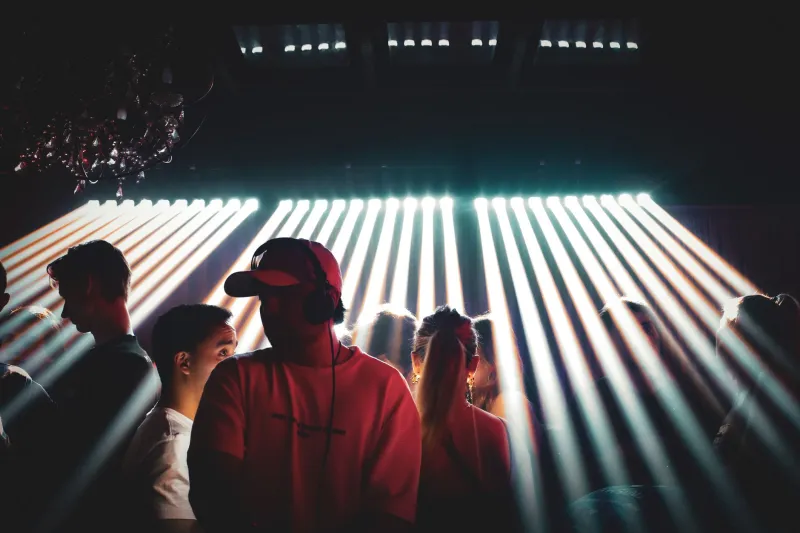
There was a time, not long ago, when you could set your watch by an American DJ set. Build, breakdown, drop. Repeat. The crowd counted it down with raised hands and phone lights, the DJ threw their hands up on cue, and everyone screamed at a moment that had been engineered to be screamed at.
That contract is quietly expiring. And if you've spent any time on a proper dancefloor lately, you've felt it.
From Climax to Constant
Spend a weekend in the right rooms — a warehouse party in Chicago, a Sunday session in Denver, a converted art space in LA — and you'll notice something almost radical: nobody's waiting. The music just... goes. Grooves layer, textures shift, energy rises and falls like breathing instead of detonation. Dancers aren't saving themselves for a moment; they're living inside one that lasts four hours.
This is house and techno logic, and for years it lived at the margins of the American scene while EDM's drop economy printed money. Now it's migrating inward. Mainstream artists who built careers on the fifteen-minute hit cycle are stretching their buildups, smoothing their transitions, and letting sets breathe. Watch a big pop-EDM headliner's recent festival footage versus five years ago — the peaks are lower, the seams are longer, and the crowd is moving differently because of it.
The Algorithm Did What Radio Wouldn't
Here's the part nobody predicted: TikTok helped kill the drop. The platform's early dance-music boom rewarded the biggest possible moment — a ten-second bass hit you could choreograph to. But the newer wave of music content on there is different. Extended mixes. Seamless blends. Creators posting forty-five-second slices of a groove with no payoff moment at all, and getting millions of views anyway.
A generation that learned electronic music through continuous mixes, livestreamed loft sets, and lo-fi house playlists never developed the drop reflex in the first place. They came in through the groove. When they finally hit a real dancefloor, they didn't ask where the drop was. They just danced.
Why the Groove Wins
Strip away the nostalgia and the argument is simple: the drop is a spike, and spikes are exhausting. A room built on one climax every three minutes produces a crowd that surges and collapses in waves — great for video, brutal for actual dancing. A room built on sustained groove produces the opposite: a floor that never empties, energy that compounds instead of resetting.
There's a craft argument too, and it favors the DJ. Anyone can program a drop. Holding a room for two hours with tension, texture, and track selection — that's the skill. The marathon set is the format that separates selectors from playlist jockeys, and American audiences are finally educated enough to tell the difference.
Is the Drop Dead?
Not quite. Let's not overcorrect. The drop still works — it's a genuinely thrilling device when earned, and festival main stages will keep using it because ten thousand people screaming is a real thing. But it's been demoted from the entire architecture of the music to one tool among many.
And that's the healthiest place it's ever been. When every track was a countdown, nothing was. Now that American crowds have learned to lock into a groove and stay there, the moments of release actually mean something again.
The best sets I heard this year didn't have a biggest moment. They had a current, and I floated in it until the lights came up. If that's where the US scene is heading — less climax, more commitment — then drop culture didn't die.
It grew up.