Your Grid Is Your Rider: How Unknown DJs Get Booked Off a Phone Screen
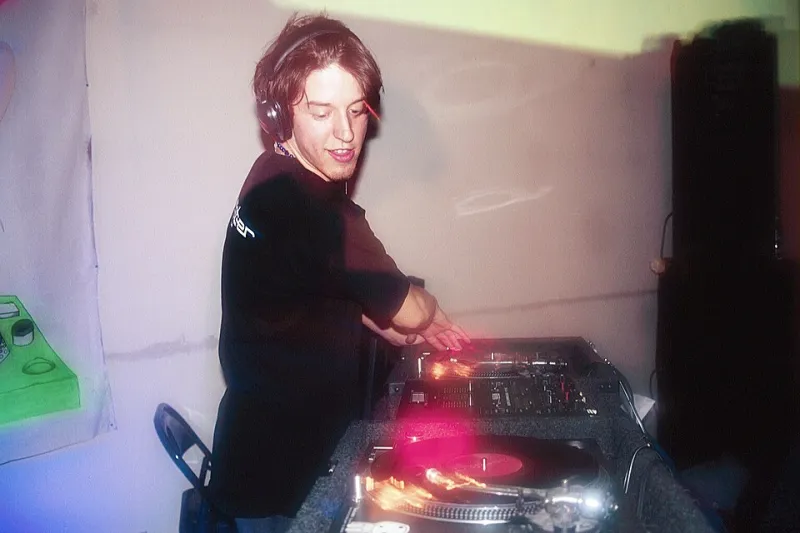
Photo: Ntht320, CC BY-SA 4.0, via Wikimedia Commons
The business card died quietly. Nobody held a funeral. It just stopped getting asked for somewhere around the time promoters started doing their A&R from the driver's seat of a Toyota Corolla, thumbing through Instagram at a red light ten minutes before they were supposed to send offers for the month.
That's the reality for the new class of American DJs coming up outside the major-label pipeline. Nobody at a warehouse party in Allston or a rooftop in Bushwick is asking for a press kit. They're asking for your handle. And whatever happens in the next thirty seconds of scrolling decides whether you're playing Friday or not at all.
The Thirty-Second Audition You Didn't Know You Were Performing
"I got booked in Denver off a single clip," says Marisol Vega, a Chicago-based selector who spent two years playing to twelve people on weeknights before one video changed her trajectory. "Somebody filmed this one moment — not even a drop, just a weird edit I made of a Tejano record into a dubstep tune — and it did like 40,000 views. Two promoters DMed me within a week. Neither of them had ever heard me play a full set."
That's not a fluke. That's the new funnel. A promoter's research process in 2025 looks something like this: watch the pinned video, scroll the grid, check if the last post was this month or last year, peek at SoundCloud plays, done. Offer sent or conversation over.
Which means your Instagram page isn't social media. It's your CV, your demo reel, and your references all compressed into a phone screen. The DJs who understand this treat their grid like a curated shelf, not a scrapbook.
What Actually Converts a Scroll Into a Booking
Talk to enough working DJs and a pattern emerges. The ones staying busy aren't necessarily the most technical or the most connected. They're the ones whose pages answer the promoter's silent questions before they're asked.
Can this person draw? A clip with a visible, moving crowd answers that instantly. Are they current? A post from last weekend beats a post from last summer. Do they have a sound? A SoundCloud link that's actually pinned and actually loads does more than a paragraph of bio copy ever will.
"I stopped trying to look cool and started trying to look bookable," Vega laughs. "Front-facing crowd shots. A highlight reel of my monthly. My upcoming dates in the caption of every post. It's not art, it's merchandising."
The Monthly That Became a Brand
Then there's the naming game — the scrappiest trick in the American underground's playbook. A cleverly named party series can do more for a DJ's career than a decade of mixes, because it gives promoters something to book that isn't just you. It's a concept with a built-in audience.
Think about the parties that crossed city lines in the last few years. The best ones have names that fit on a flyer and a vibe you can infer before you even click. A monthly with a distinct identity — even a tiny one in a 100-cap room in Detroit or Oakland — signals three things at once: taste, hustle, and a following.
"My party got me gigs my DJ name never would have," says one Northeast promoter-turned-DJ who asked to go by his party name, Static Social. "Promoters book the brand first, the person second. Once 'Static Social' was a thing people recognized from Boston to Philly, I stopped being an opener. I was a franchise."
The Repost Economy and the Right Place at the Right Time
There's a third lever, and it's the least controllable: the well-timed repost. One share from a bigger artist, a tastemaker page, or even a festival's story can flood a DJ's inbox overnight. The DJs who benefit from it are the ones who were already ready — links live, mixes uploaded, calendar open.
The lesson buried in all of this isn't cynical. It's practical. The American dance music economy runs on attention, and attention is measured in seconds of Wi-Fi. The business card is gone. The link in bio is the whole storefront.
Keep it stocked.