Cloud Crates and Discord Drops: Inside the Modern DJ's Music Vault
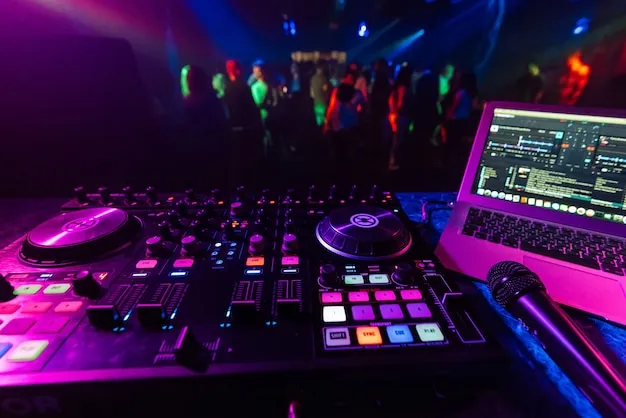
Photo: DJ laptop cloud music library controller booth night, via img.freepik.com
There was a time, not that long ago, when a DJ's entire career could fit on a 64-gig stick in their back pocket. You'd see them huddled near the booth before doors, trading files like baseball cards, somebody's laptop open to a folder named "NEW_Shit_FINAL_v3." That era is basically over. Walk through any green room in America in 2025 and you'll find something different: a phone, a cloud login, and a crate that lives everywhere at once.
The Folder Died Quietly
Nobody threw a funeral for the download folder. It just kind of faded, the way the CD binder did before it. Streaming-enabled decks changed the math — when your CDJs can pull from a synced library, the question stops being "what did I remember to export?" and becomes "what did I tag?"
That shift sounds small. It isn't. Preparation used to be a hard stop: you sat down, downloaded, renamed, exported, burned. Now the crate is a living thing that updates from the road, from the plane, from a soundcheck in Denver. The DJs we spoke with all said versions of the same thing: the vault follows them now, not the other way around.
Where the Music Actually Comes From
Discovery has splintered into a dozen channels, and every DJ has their own pipeline. A few keep coming up:
- Beatport playlists as a public crate. Some selectors treat their charts like a running diary, curating them weekly so promoters and fans can peek at what's rotating.
- Discord drop channels. Producers are leaking test presses and IDs straight into private servers now. If you're not in three or four of these, you're hearing the song two months late.
- Group texts that function like record pools. The old-school promo pool went private and got a group chat name. Somebody's cousin works at a label, somebody else has a Plug.dj habit, and the good stuff moves at texting speed.
- Bandcamp Fridays and SoundCloud rips. Still undefeated for the weird stuff that never touches a major platform.
One touring selector put it plainly: "The USB was a snapshot. The cloud crate is a diary. I can see what I was into in March, and honestly, sometimes that's embarrassing."
The New Prep Ritual
So what does prep look like when the folder is gone? It looks like curation. Tagging is the new beatmatching — energy ratings, key notes, vibe labels like "sunrise" or "hostile." The DJs who thrive at this treat their library like a garden, pruning weekly, killing the tracks that stopped hitting, feeding the ones that keep working.
There's a tool arms race happening too. Rekordbox and Serato still anchor things, but layered on top you'll find playlist managers, cloud sync services, and AI-assisted organizers that auto-tag by energy and mood. Purists grumble. The pragmatists are already three tours ahead.
The rituals are personal. One Brooklyn resident we talked to does a Sunday-night "crate purge" with a glass of bourbon, deleting anything that didn't earn its spot. A Vegas resident keeps three parallel libraries: one for main room, one for afterhours, one for "when the promoter says just play something fun." Everyone has a system. Nobody has the same one.
What We Lose When Nothing Is Lost
Here's the counterpoint worth sitting with: when music lived in a folder, you knew it. You downloaded it, renamed it, stared at the filename forty times. Scarcity bred intimacy. A cloud crate with twelve thousand tracks can become a jukebox instead of a library — a bottomless buffet where nothing gets savored.
The best selectors in 2025 seem aware of this. They impose artificial limits. They keep a "desert island" playlist of thirty tracks they'll defend with their lives. They treat the cloud like a warehouse and the crate like a showroom.
Because at the end of the night, the crowd doesn't know or care where the file lives. They know whether the room moved. The vault just has to be ready when the moment comes — and in 2025, it's ready everywhere you are.