Pass the Salt, Drop the Bass: Inside America's Dinner-and-Dance Underground
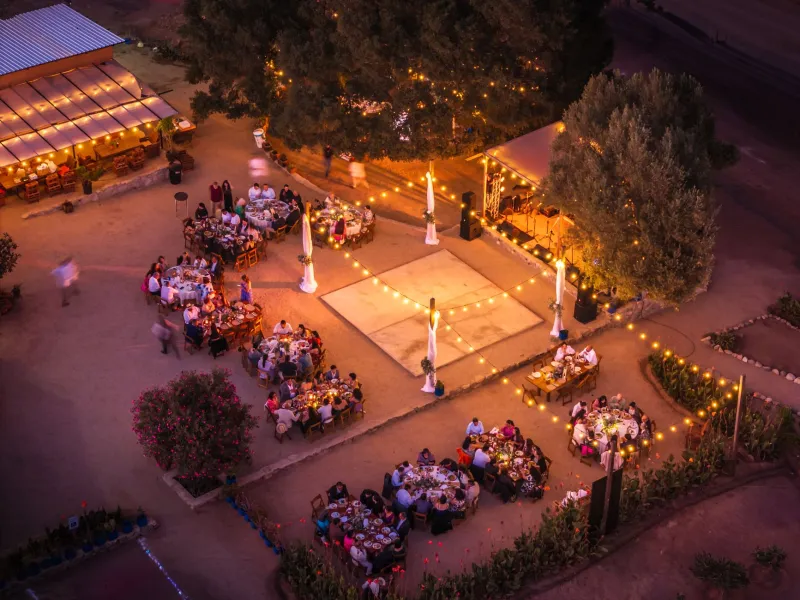
There's a moment around 8:40 PM at these parties that doesn't happen anywhere else in dance music. The second course has just landed — family-style, platters passed hand to hand down a twenty-foot table — and the DJ, who's been riding warm, unhurried house grooves since guests arrived, eases into something a little deeper. Nobody's dancing yet. Everybody's talking. And somehow, the room already feels like the best hour of a festival, except everyone is seated and holding a fork.
Welcome to the dinner-and-dance movement, the quiet counter-programming to America's mega-rave industrial complex.
Long Tables, Longer Sets
The format is simple enough to fit on a flyer: one long communal table (or several), a multi-course meal cooked in-house or by a guest chef, and a DJ who plays a genuinely extended set — not the 75-minute festival sprint, but a four-to-six-hour arc that moves with the meal. The venues are rarely clubs. Think Brooklyn greenhouses, Los Angeles backyard installations, converted Detroit storefronts, a friend-of-a-friend's ranch outside Austin.
What started as a pandemic-era workaround — when clubs were dark but people still needed to gather — has hardened into a real scene. Promoters discovered that when you feed people before you make them dance, the dance floor changes character entirely. Strangers who split a branzino at a shared table don't need three drinks and a lucky collision to start talking. By the time the plates clear, the room is already a community.
Why the Mega-Rave Needed a Rival
Let's be honest about what the big stuff became. Festival culture in the US is a marvel of logistics and a marvel of everything else: $19 beers, thirty-minute walks between stages, sets truncated to fit the schedule grid, and a viewing experience that's 40% LED wall, 60% phone screens held aloft. It's spectacular. It's also, for a lot of people, exhausting.
Dinner-and-dance events are the correction. Capacity in the low hundreds instead of the tens of thousands. No VIP tier because the whole room is the VIP tier. Phones tend to stay in pockets — it's hard to film a set when your hands are busy with the pass-the-plate situation.
There's also a generational hunger at work. The post-2020 crowd got fluent in small gatherings, in intentionality, in the idea that an experience should be curated rather than merely attended. A loft dinner with a chef you can watch working and a selector who plays the entire night isn't just a party. It's a night with a point of view.
Six Hours, One Room, No Safety Net
For the DJs, this format is a different sport entirely. Festival sets reward the highlight reel — arrive, detonate, exit. A dinner set is a slow-build discipline. You're scoring a meal. You're reading a room full of people who are, at first, literally sitting down.
The best selectors treat it like a long-form composition. The first hour is ambient-leaning and conversational — warm soul, dubbed-out disco, deep house at a volume that lets you hear your tablemates. As the meal winds down, the tempo and energy climb in careful increments. By hour four, the table has migrated to the floor and the set has earned its peak because the room grew into it together.
Talk to DJs who play these events and they'll tell you the dinner set has changed how they play everywhere else. When you've spent six hours calibrating energy for people who can see your face and hear every transition, you stop hiding behind the drop. You learn patience. You learn that a well-timed edit can land harder than a well-timed siren.
The Economics of Intimacy
Here's the part that makes promoters sweat: this model is expensive. Feeding 300 people well costs real money, and small rooms cap revenue in a way warehouses never do. The ticket prices reflect it — usually $75 to $150, sometimes more with beverage pairings — which raises a fair question about who gets in the door.
The scene's answer, still evolving: sliding-scale tickets, community seats, and backyard editions that keep the format accessible. And plenty of fans argue the math works out. One dinner event can cost less than a festival weekend once you count travel, lodging, and the fees that quietly double a GA pass. One night, no camping gear, and you leave well-fed in every sense.
The Frequency of the Table
There's a through-line here that anyone who's loved dance music for a while will recognize. The genre's earliest American chapters — the Loft, the Paradise Garage, Chicago's loft parties — were built on exactly this DNA: curated rooms, long sets, a crowd bound by more than a bassline. The dinner-and-dance movement isn't inventing anything. It's remembering.
And maybe that's the real story. In a decade where electronic music scaled up, up, and up, a scene of long tables and six-hour sets is scaling back down to the original unit of the culture: people in a room, sharing sound and sustenance, until the line between dinner party and dance party dissolves entirely.
Pass the salt. The night's just getting started.