Fluorescent Church: The Sacred Ritual of the 2 AM Gas Station Run
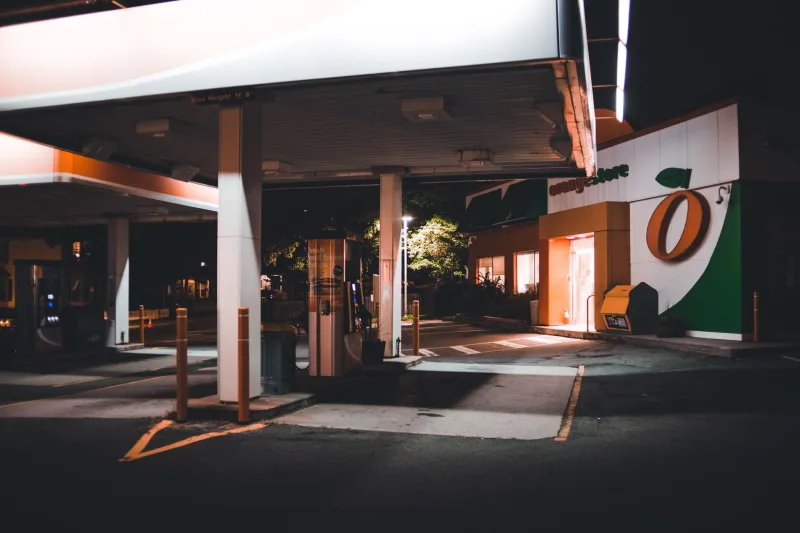
There's a moment every raver knows. The lights come up, the bass cuts out, and someone — always someone — says the sacred words: "Who's trying to hit the gas station?"
No one plans it. No one promotes it. And yet, from Detroit to Denver, the late-night gas station run has become the unofficial final set of every American night out. No cover charge. No lineup. Just fluorescent lighting, a wall of energy drinks, and whatever playlist happens to be bleeding out of somebody's cracked phone speaker by the ice machine.
The Decompression Chamber
Ask around any parking lot at 2 AM and you'll hear the same thing: nobody's ready to go home. Not because the party wasn't enough — but because it was almost too much.
"After four hours of a warehouse set, your nervous system is still at 140 BPM," says Marisol Vega, a promoter in Chicago who's been throwing loft parties since 2016. "The gas station is where you land the plane. It's the cooldown track for your whole body."
That's not a joke, either. Nightlife veterans describe the ritual in almost therapeutic terms. The bright, sterile, aggressively un-sexy environment of a convenience store acts as a sensory reset. After a room designed to overwhelm — strobes, fog, sub-bass you feel in your ribs — there's something almost meditative about a fluorescent-lit aisle of chips and bottled water.
"It's the only place in nightlife where nobody's performing," Vega laughs. "You're just a person in crocs buying a Gatorade."
The Strangest Playlist in America
Here's where it gets weird — and wonderful. Ask any touring DJ about gas station hangs and they'll tell you the music matters, even when it's terrible.
"I've heard lo-fi hip-hop, reggaeton, someone's SoundCloud rap project, and a full CCM worship album — back to back — outside a Buc-ee's outside Austin," says touring artist Devon Kell, who plays festivals across the Southwest. "And honestly? Some of the best music conversations I've ever had happened right there. Somebody shazams a song, somebody else pulls up an old Moodymann track, and suddenly you're deep in it."
The phone-speaker playlist has become its own micro-genre of chaos. It's curated by committee, interrupted by notifications, and utterly unbothered by beatmatching. And that's exactly the point. After a night of meticulously programmed sets, the gas station playlist is music with zero agenda — pure vibe, no craft, all heart.
Some crews have turned it into tradition. In Atlanta, a group of ravers who call themselves the Lot Kids rotate DJ duties for the post-club pit stop, each person contributing three songs. In Detroit, techno heads joke that the real afterparty is whoever's aux cable survives the drive.
The Clerks Have Seen Everything
Of course, none of this happens without the people behind the counter — the true unsung archivists of American nightlife.
"Friday and Saturday nights, it's a whole scene," says Ray, a third-shift clerk at a 24-hour station off I-75 near Toledo, who asked to use only his first name. "Glitter everywhere. Bare feet — bare feet! Guys arguing about which DJ opened versus headlined. Somebody always asks if we sell phone chargers. We do. We sell out."
Ray estimates he's witnessed a thousand post-club pilgrimages, and his read on the ritual is surprisingly warm. "They're respectful, mostly. They buy stuff. And honestly, it breaks up the shift. Three a.m. with nobody in here is the longest hour of your life."
Some clerks even become part of the lore. There are stations in Los Angeles and Philadelphia where regulars swear certain overnight workers have "the best taste," quietly cueing up their own music over the store speakers for whoever's lingering by the taquitos.
Why the Parking Lot Wins
Sociologists of nightlife — yes, they exist — point out that these informal third spaces fill a real gap. Club culture is structured: door policies, drink minimums, unspoken rules about who dances where. The gas station hangout has none of that. It's radically uncurated.
"You get touring DJs talking to first-time ravers," says Kell. "You get the bartender off shift next to the bachelorette party that wandered in from a hotel bar. The parking lot is the great equalizer."
It's also free, which in an era of $90 festival tickets and $22 cocktails shouldn't be underestimated. The best conversations of the night — the ones people actually remember — happen leaning against a sedan with a slushie, no VIP wristband required.
Feel the Frequency, Even at the Pump
For a website built around living the night, it would be easy to romanticize only what happens inside the club. But the truth is that the night doesn't end when the music stops. It exhales. It idles in a parking lot. It debates setlists over a hot case taquito.
So the next time the lights come up and someone mutters those magic words, don't fight it. Grab your crew, cue up something ridiculous, and head for the nearest glowing sign. The dance floor gave you the night. The gas station gives you the morning after.
Fluorescent lights never felt so much like a hug.