The Hands on the Faders You Never See: Lighting Directors on Owning the Dance Floor Without Playing a Note
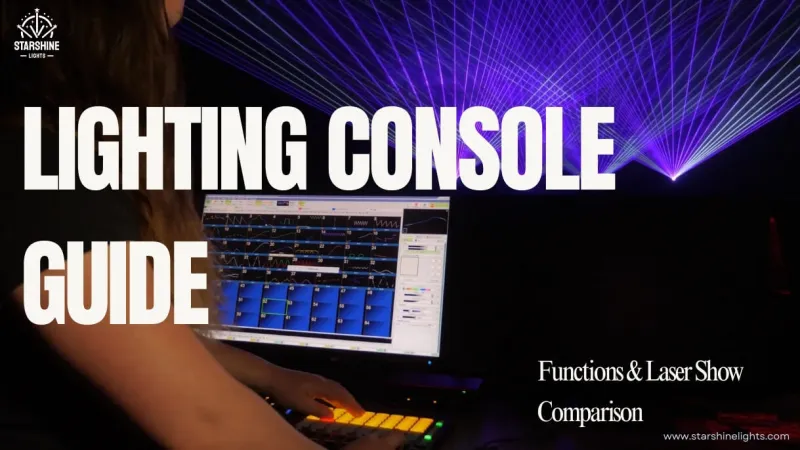
Photo: concert lighting director console booth laser show, via www.starshinelights.com
Here's a truth most dance floors never clock: the person who made that drop hit like a meteor wasn't the DJ. It was the woman in the booth to the left of the stage, hand hovering over a fader, waiting for the exact millisecond to kill the white strobes and let a single amber wash breathe.
Lighting directors are the invisible co-producers of every great American set, from Portland warehouse parties to Miami pool decks. And if you ask them, they'll tell you they're not decorating the music. They're playing it.
Reading a Room Before the First Kick Drum
Every LD we spoke to described the same pre-show ritual: stand in the empty venue, look at the ceiling height, the rigging points, where the crowd will actually stand versus where the promoter thinks they'll stand.
"A 600-cap room in Denver with a 12-foot ceiling is a completely different animal than the same capacity in Brooklyn," says a veteran operator who's run rigs for everyone from touring bass acts to underground house nights. "Low ceiling means I can get intimate. I can put light on people instead of just over them."
That first read shapes everything. Where the fog goes. Whether the beams will cut or wash. Whether the night will feel like a cathedral or a living room.
The Sync Isn't Automatic
Yes, there's timecode. Yes, some touring acts run fully programmed shows where the LD pushes "go" and the rig does the rest. But ask anyone working club nights and one-off festivals, and they'll tell you the real skill is live improvisation.
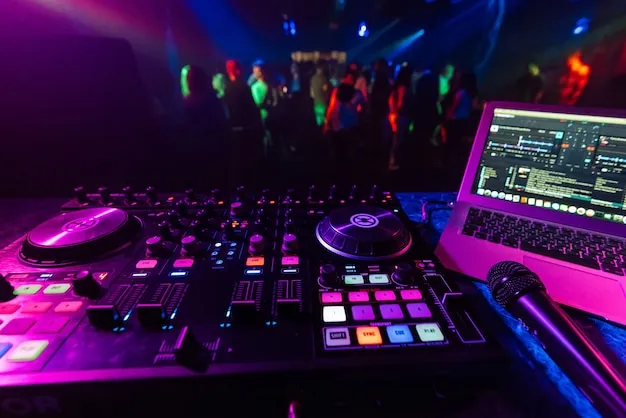
"I'm cueing off the DJ's hands," one Chicago-based operator explains. "The way they hover over the jog wheel. The way they kill the low end. When the DJ pulls the mids out, I pull my intensity down. When they slam it back in, that's my cue."
It's a conversation without words. The best LDs describe it as learning a DJ's body language within three tracks, then betting the whole night on that read.
War Stories From the Booth
Ask for horror stories and they come fast.
There's the warehouse show in Oakland where the power dropped out mid-drop and the operator spent forty seconds running the whole room on two battery-powered LED bars while the generator kicked back in. "People still tell me that was the best moment of the night. Darkness is a tool, not a failure."
There's the festival main stage where a laser operator discovered mid-set that the haze machine had been filled with the wrong fluid, turning every beam into a visible cloud of cough syrup smell. The show went on. The LD bought the crowd bottled water out of pocket.
And there's the universal complaint: DJs who request "no strobe, lots of white light, keep it on me the whole time." Every single operator groans at this. "Light on the DJ's face for an hour is not a look. It's a hostage video."
When the Room Trusts You
The flip side, the reason anyone does this job, is the moment everything locks in. The DJ builds for eight bars. The LD holds the rig in near-blackout, just a faint blue pulse on the back wall. Then the drop lands and the operator punches every fixture at once, full intensity, strobes rippling at 120 BPM.
"You feel the crowd scream before you hear the music," one Las Vegas resident operator says. "That's the whole job. That's the entire reason I'm standing in a dark booth eating cold French fries at 3 AM."
What DJs Should Know
If you're an up-and-coming DJ, here's the advice the operators gave us, free of charge:
- Look left of the stage. Make eye contact with your LD before the set. A nod buys you goodwill for an hour.
- Tell them your big moments. Even a rough "big drop around track four" lets them prep a punch instead of guessing.
- Don't fight the darkness. A room that goes black for two seconds isn't a technical failure. It's the most powerful effect in the building.
- Thank them by name. Nobody else will.
The next time a set gives you chills, remember: the DJ built the tension. But somebody in the dark, sweating next to a lighting console, decided exactly when you'd feel it.
Feel the frequency. Somebody else is lighting it.